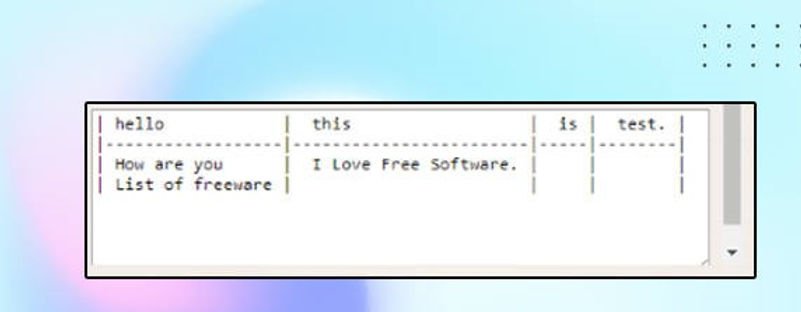
Struggling to wrangle data into perfectly aligned Markdown tables? You're not alone. Manual table creation in Markdown can feel like a frustrating game of aligning dominoes, prone to tiny errors that break the entire structure. That's where the Top Markdown Table Generator Tools Compared come into play, transforming a tedious chore into an effortless task.
Imagine building robust, readable tables with the ease of a spreadsheet, then instantly generating the clean Markdown syntax. That's the promise these tools deliver, bridging the gap between human readability and code efficiency.
At a Glance: Why Markdown Table Generators Are a Game-Changer
- Visual Simplicity: Edit tables in a familiar spreadsheet-like interface.
- Error-Free Syntax: Automatically generate correct Markdown, eliminating manual mistakes.
- Rapid Data Import: Convert CSV or Excel data directly into Markdown tables.
- Live Feedback: See your table rendered in real-time as you build it.
- Dynamic Adjustments: Easily add, remove, and rearrange rows and columns.
- Customizable Alignment: Control text alignment (left, center, right) for each column.
- Universal Compatibility: Generated tables work across GitHub, Notion, Reddit, and most Markdown-supporting platforms.
- Boosts Productivity: Saves significant time and mental energy compared to manual coding.
The Unsung Hero: Why Markdown Tables Are Essential (and Annoying Manually)
Markdown, with its minimalist syntax, has become the lingua franca for documentation, project descriptions, and quick notes across developers, writers, and power users alike. Its elegant simplicity makes text-based files human-readable and version-control friendly.
But then there are tables.
While Markdown handles headings, lists, and bold text with grace, tables are its Achilles' heel. Crafting a Markdown table manually involves a delicate dance of pipe characters (|), hyphens (-), and colons (:). One misplaced character, an extra space, or an inconsistent line break, and your beautifully organized data collapses into a jumbled mess. Debugging these small errors can eat up valuable time, making the process more frustrating than productive.
Yet, tabular data is indispensable. We use tables to compare features, display configurations, list specifications, summarize data, and organize project tasks. They provide structure and clarity that plain text simply can't match. This tension—between the necessity of tables and the manual pain of creating them—is precisely why top Markdown table generator tools have become essential utilities.
Demystifying the Markdown Table Generator: Your Spreadsheet for Code
At its core, a Markdown table generator is a visual editor that lets you build tables as you would in a spreadsheet application, but with the specific purpose of outputting Markdown syntax. Think of it as a specialized, web-based (or sometimes desktop-based) mini-Excel for Markdown.
These tools abstract away the intricate syntax, allowing you to focus purely on your data and its presentation. Instead of typing | Header 1 | Header 2 | and then |---|---| and meticulously aligning everything, you simply click, type, and drag.
Under the Hood: A Quick Look at Markdown Table Syntax
To truly appreciate what a generator does, it helps to understand the basic Markdown table syntax it produces:
- Pipe Characters (
|): Used to separate columns in every row. - Header Row: The very first row defines your table's headings.
| Name | Age | City | - Separator Row: The second row is crucial. It uses hyphens (
-) to create a visual break and colons (:) to define text alignment for each column: :---aligns content to the left.:---:centers content.---:aligns content to the right.|:---|:---:|---:|(Left-aligned Name, Centered Age, Right-aligned City)- Data Rows: All subsequent rows contain your actual data.
| Alice | 30 | New York || Bob | 24 | London |
Manually maintaining these elements across dozens of rows and columns can quickly become a nightmare. Generators streamline this by handling all the pipes, hyphens, and colons behind the scenes.
What Makes a Top Markdown Table Generator Stand Out? (Key Features)
When evaluating the best Markdown table generators, several core functionalities distinguish the truly useful from the merely adequate. These are the features you should actively seek out:
1. Intuitive Visual Editor & Spreadsheet Interface
This is the heart of any good generator. You should be able to click into cells, type, and navigate just like you would in Google Sheets or Microsoft Excel. The best tools offer:
- Click-to-Edit: Directly modify cell content.
- Easy Navigation: Use arrow keys or mouse clicks to move between cells.
- Contextual Controls: Buttons or menus that appear when you interact with the table (e.g., to add/remove rows/columns).
2. Seamless Data Import Capabilities (CSV, Excel)
Converting existing data is a massive time-saver. A top-tier generator will let you:
- Paste CSV Data: Copy comma-separated values directly into the tool.
- Upload CSV/Excel Files: Import data from
.csvor.xlsxfiles, automatically populating the table. This is incredibly useful for transforming raw data into presentation-ready Markdown.
3. Live Preview & Real-time Rendering
Seeing is believing. The tool should provide:
- Instant Feedback: As you edit, the generated Markdown syntax and/or the rendered table view should update immediately. This helps catch formatting errors or unwanted visual quirks before you export.
- Split View: Often, the editor on one side and the preview on the other provides the best experience.
4. Dynamic Sizing: Effortless Row and Column Management
Your data isn't static. A great generator makes it simple to:
- Add/Remove Rows & Columns: Dedicated buttons (
+/-) or context menu options to expand or contract your table. - Reorder: Some advanced tools allow dragging and dropping rows or columns to rearrange them.
5. Precise Column Alignment Control
Readability often hinges on proper alignment. Look for the ability to:
- Set Alignment Per Column: Easily switch between left, center, and right alignment for individual columns, often with a single click. Remember, Markdown's standard syntax means this choice applies to the entire column.
- Visual Cues: The tool should visually indicate the chosen alignment (e.g., small icons, changes to the separator line).
6. Effortless Export & Copy
Once your table is perfect, getting the Markdown out should be trivial:
- Copy to Clipboard: A single button to copy the generated Markdown code to your clipboard.
- Download Option: For larger tables or archival purposes, downloading the
.mdfile can be handy.
7. Sample Data & No Registration Required
For quick tasks or first-time users:
- Load Sample Data: A pre-filled table helps you get a feel for the tool without having to input your own data immediately.
- No Sign-up Friction: The best tools are accessible instantly, without requiring an email address or creating an account. This makes them ideal for one-off tasks or when you're in a hurry.
From Blank Canvas to Polished Table: Your Step-by-Step Guide
Using a Markdown table generator is designed to be intuitive, but here's a general workflow that applies to most top tools:
- Start Your Table:
- Load sample data if you're experimenting or need a template.
- Begin with an empty table and adjust its initial size.
- Alternatively, import your data from a CSV or Excel file to instantly populate the table.
- Populate & Edit Content:
- Click on any cell and type or paste your data.
- Use familiar keyboard shortcuts (e.g., Tab to move to the next cell, Shift+Tab to move back).
- You can even include basic Markdown formatting (like
**bold**,*italic*,links, or`code`) directly within the cells.
- Adjust Table Dimensions:
- Look for
+and-buttons usually located near the table's edges or corners to add/remove rows and columns as needed. - If available, use drag-and-drop handles to reorder.
- Set Column Alignment:
- Click on the header of each column (or a dedicated alignment control) to toggle between left, center, and right alignment.
- The generator will automatically insert the correct
---:,:---:, or:---syntax in the separator row.
- Review with Live Preview:
- Constantly check the live preview to ensure your table looks exactly as you intend it to. This helps catch any formatting issues early.
- Export Your Markdown:
- Once satisfied, click the "Copy Markdown" or "Copy to Clipboard" button. The tool will generate the clean, standard Markdown table syntax.
- Paste into Your Project:
- Paste the copied Markdown code directly into your GitHub README, blog post, Notion page, or any other platform that supports Markdown tables.
Following these steps allows you to leverage the full power of an online markdown table generator for seamless table creation.
Beyond Readme Files: Practical Use Cases for Generated Tables
While often associated with GitHub READMEs, Markdown tables generated by these tools have a much wider applicability:
- Documentation:
- API specifications (endpoints, parameters, responses).
- Feature comparisons (e.g., between different versions of a product).
- Configuration options and their values.
- Technical specifications for hardware or software.
- Any
wikiorREADMEfile that needs structured data. - GitHub Repositories:
- Detailed project descriptions.
- Contribution guidelines (e.g., listing accepted file types or commit message conventions).
CHANGELOGentries summarizing new features or bug fixes.- Issue templates with predefined fields.
- Blog Posts & Articles:
- Product comparison tables (specs, pricing, features).
- Lists of key features or benefits.
- Pricing tables for services or software.
- Summaries of research data or statistics.
- Static Sites (Hugo, Jekyll, etc.):
- Building pricing pages for products/services.
- Creating event schedules or lists.
- Any content requiring tabular display on a static website.
- Project Management & Collaboration:
- Task lists with assignee, status, and due dates.
- Progress reports with completion percentages.
- Team member information and roles.
- Project timelines or milestones.
Crafting Perfection: Expert Tips for Your Markdown Tables
Generating the syntax is one thing; making your tables truly effective and readable is another. Here are some pro tips:
- Prioritize Readability for Numerical Data: Always right-align numeric columns (like prices, quantities, or scores) for easier scanning and comparison. Text columns usually look best left-aligned.
- Embrace Minimal Syntax: Generators excel at producing the leanest possible Markdown. Resist the urge to manually "pretty print" the generated code with extra spaces unless your specific Markdown renderer requires it. Cleaner code is easier to maintain.
- Concise, Descriptive Headers: Your table headers should be short, clear, and accurately describe the data below them. Avoid overly long or ambiguous titles.
- Consistent Formatting is Key: Maintain uniform capitalization (e.g., Sentence case, Title Case) and formatting styles across all cells, especially within the same column.
- Strategic Alignment Choices:
- Left-align: Most textual content, names, descriptions.
- Center-align: Short codes, IDs, small boolean values (Yes/No).
- Right-align: Numbers, currencies, dates (sometimes).
- Beware of Excessive Column Widths: Tables that stretch too wide become unreadable, especially on mobile devices. Consider breaking down very wide tables or allowing for horizontal scrolling (which some Markdown viewers do automatically).
- Handle Empty Cells Gracefully: Instead of leaving cells completely blank, consider using "N/A" (Not Applicable), "—" (dash), or "N/A" to indicate missing or irrelevant data. This adds clarity and prevents ambiguity.
- Always Test Your Tables: Copy the generated Markdown and paste it into its final destination (e.g., GitHub, Notion) to ensure it renders correctly. Different Markdown parsers can sometimes have subtle variations.
- Rich Content in Cells: Remember, Markdown tables aren't just for plain text. You can embed basic Markdown formatting like
**bold**,*italic*,links, and even`inline code`directly within individual table cells.
Broad Reach: Where Your Generated Tables Will Work (Compatibility)
One of the great advantages of using a standard Markdown table generator is the broad compatibility of its output. The Markdown syntax generated is typically understood by a vast array of platforms, ensuring your tables look consistent wherever they appear.
You can confidently paste your generated Markdown tables into:
- GitHub & GitLab: For READMEs, wikis, issue descriptions, and pull request comments.
- Reddit & Discord: To share structured information in communities.
- Stack Overflow: For presenting code examples or comparisons in answers.
- Notion & Obsidian: Popular knowledge management and note-taking apps.
- Jupyter Notebooks: For displaying data frames or results.
- GitBook & Docusaurus: Documentation generation tools.
- Most Static Site Generators: Such as Hugo, Jekyll, Eleventy, etc.
- Any Platform Supporting Standard Markdown Table Syntax: Which includes a significant portion of modern web platforms and text editors.
This wide compatibility means you can generate a table once and deploy it almost anywhere, saving you from reformatting for different environments.
Understanding the Limits: What Markdown Tables (and Generators) Can't Do
While Markdown table generators offer immense convenience, it's important to understand the inherent limitations of Markdown tables themselves. These aren't shortcomings of the tools, but rather of the Markdown specification they adhere to.
- Column-Wide Alignment Only: Markdown's standard table syntax only allows you to set alignment for an entire column. You cannot have individual cells within the same column aligned differently (e.g., one cell left-aligned, another center-aligned). If you need this level of granular control, you'll likely need to resort to HTML tables.
- Challenges with Very Wide Tables: While generators can produce tables with many columns, extremely wide tables will often suffer on smaller screens. Many Markdown renderers will simply display them with horizontal scrolling, which isn't always user-friendly. For complex, multi-column layouts, other solutions (like dedicated data visualization libraries or even images of tables) might be more appropriate.
- No Merged Cells or Complex Layouts: Standard Markdown tables do not support advanced spreadsheet features like merging cells (colspan or rowspan), wrapping text automatically within a cell (though some renderers might do this), or multi-line headers without careful manual
brtags which break standard Markdown. For these, HTML tables are the only native solution. - Performance with Extremely Large Tables: While there's no hard limit on rows/columns, very large tables (hundreds of rows, dozens of columns) might load slowly or render poorly on some platforms. It's often better to break down massive datasets into multiple, smaller, more focused tables, or link to the raw data if appropriate.
Understanding these limitations helps you choose the right tool for the job. For 90% of documentation and simple data display needs, Markdown tables (generated or not) are perfect. For the remaining 10% requiring intricate layout, look towards HTML.
Choosing Your Champion: What to Look For in the Best Tool
Given the features and considerations, how do you pick the "top" Markdown table generator for your needs? It boils down to prioritizing convenience, flexibility, and reliability.
- Prioritize Ease of Use: The best tool is one you'll actually use. It should be intuitive, responsive, and require minimal effort to create a table. A clean, uncluttered interface is a huge plus.
- Robust Import/Export: If you frequently work with external data sources, strong CSV/Excel import capabilities are non-negotiable. Seamless copy-to-clipboard is a must for everyone.
- Real-time Feedback: A live preview saves countless headaches by showing you exactly what your table will look like as you build it.
- Reliability & Performance: The tool should be stable, fast, and consistently generate correct Markdown syntax without unexpected errors.
- Offline vs. Online: Most top tools are online web applications, offering instant access. If you have specific privacy concerns or frequently work without internet, you might look for desktop applications (though these are less common specifically for Markdown tables).
- Minimalist Approach: Look for tools that focus on generating clean, standard Markdown. Avoid those that introduce proprietary syntax or excessive formatting that might not be compatible everywhere.
By focusing on these criteria, you'll quickly identify the generator that truly simplifies your Markdown workflow. While specific tool recommendations can fluctuate, the underlying principles of what makes them effective remain constant.
The Future of Tabular Data in Markdown
Markdown table generators are more than just productivity hacks; they're essential bridges between data and clear communication. They empower everyone, from developers writing API docs to content creators detailing product specs, to present complex information elegantly without getting bogged down in syntax.
As Markdown continues to evolve and its adoption grows, these generators will only become more sophisticated, potentially integrating with more data sources, offering enhanced visual cues, and further refining the user experience. For now, investing a few minutes to find the generator that clicks with your workflow will pay dividends in saved time, reduced frustration, and consistently professional-looking Markdown documents. Dive in, experiment, and say goodbye to manual table headaches!